|
Features
You are here
Carney’s 2026 budget: Elbows up for the billionaires
November 13, 2026
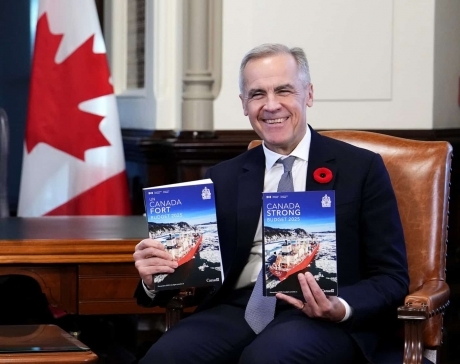
Prime Minister Goldman Sachs AKA Mark Carney has delivered a budget that will make the billionaires richer at the expense of working people. It is titled Masters of Our Destiny. Once again, it plays on the fear of a Canada under Donald Trump’s thumb, and it uses that fear to move ever more wealth to the top of society.
Mega deductions for the mega rich
Canadian capitalists have nothing to fear from the trade war. Carney has assured them that the state will be there to prop up their profits through any upheaval. The budget contains $142 billion in new tax incentives, spending and other measures over the next five years. The largest single item is the $36 billion “Productivity Mega Deduction”, which allows businesses to deduct the full cost of new capital investments upfront. It will drain more than $7 billion a year from the treasury. A new Canada Growth Incentive includes a tax exemption up to $15 million in capital gains from successful investments, a benefit that only people who already have millions to invest can use.
Carney’s budget rewards war profits
The Canadian Centre for Policy Alternatives (CCPA) calculates that 29 per cent of the mega deduction will go to oil extraction and refining and another 10 per cent to mining . These are the industries that have just made a fortune from the war on Iran with the rising gas and oil prices. According to the CCPA, pre-tax profits in oil and gas extraction rose from $7.4 billion in the first quarter of 2026, before the war, to $16.9 billion in the second. The war on Iran pushed up oil prices and Canada’s GDP, and the government now projects $23.9 billion more in revenue a year on average over the next five years. Rather than taxing the windfall, Carney chose to give the windfall’s beneficiaries a tax break. The CCPA also argues that most of this capital spending would already happen without the incentive, which means the money is simply given away. In other words, it is a transfer of public wealth for no purpose other than inflating profits. Public institutions are shut out of it entirely, because only companies that pay corporate income tax qualify, so universities and hospitals receive nothing.
Cutting the workers who deliver public services
In the 2026 budget, the federal public service shoulders the heaviest blow. The government has already cut 38,000 of the 40,000 jobs it planned to eliminate. The only departments allowed to grow were the military and the spy agencies. National Defence added 3,700 positions and the Communications Security Establishment added 500.
The Public Service Alliance of Canada (PSAC), the largest federal union, points out that the government wants to bring 150,000 more people into the tax benefit system and at the same time reduce people’s contact with Canada Revenue Agency staff. More than half of Parks Canada workers recently received notices that their jobs may be eliminated. Two weeks later the government renewed the Canada Strong Pass, which had already increased visits by 13 per cent without adding staff.
Public institutions take the risk for private capital
The budget also merges Export Development Canada and the Business Development Bank of Canada into a single federal development bank, which will hold more than $120 billion in assets. The government says it expects “greater risk tolerance” from these Crown corporations, which means more public money exposed to the risks of private investors. The Canada Strong Fund, endowed with $25 billion over three years, will operate as an arm’s-length Crown corporation. This fund is designed to grow through the sale of public assets, among which Canada’s largest airports are one possible source. The Carney government wants to create an “investment supercycle” by turning public institutions and public property into tools that lower the risk for private capital.
Crumbs for the rest of us
Carney has heard the anger of working people, and he is playing a sleight of hand to suggest that he cares. The centrepiece is a one-time top-up to the Canada Groceries and Essentials Benefit (CGEB), the program that replaced the GST/HST credit, to be paid in early 2027. For a couple with two children the new money comes to $679, which is less than a month’s groceries for that family. The CCPA estimates that it will lift 120,000 people from just below the poverty line to just above it. Carney returns a small fraction of the taxes workers have already paid, and that money goes straight back to the grocery oligarchs who continue to gouge working-class consumers.
Food bank funding has been renewed, and it will help some families eat. It is still a drop in the bucket, and it does not touch the profits of the grocery chains. If Carney were serious about reducing the need for food banks, he would introduce price controls on essential food items. That would cost the public far less than another round of benefits. But Carney is not a man who will interfere with the pursuit of more billions for the rich.
Some provisions will help, such as the $5.4 billion for childcare. Even so, fees outside Quebec in the larger provinces remain well over $10 a day, and people without children get nothing from it. The budget has no plan for the crisis in post-secondary education, even as students across Ontario walk out over cuts to OSAP. It also does nothing to slow the privatization of healthcare, which provincial premiers are driving as they gut the public system.
The budget doubles down on Bill C-39, Carney’s omnibus bill, which is an assault on labour rights, environmental standards and treaty obligations to First Nations. The budget carries that bill’s agenda forward, including the privatization of public infrastructure such as airports. Workers who lose the right to strike will fall further behind, and Carney offers them tax credits in place of decent-paying jobs.
CUPE National President Mark Hancock responded to the budget: “The Carney Liberals can afford to invest in the workers and public services that are the bedrock of this country. Instead, the budget rolls out the red carpet for billionaire investors to profit from privatization and pulls the rug out from under working families. We won’t make Canada stronger by making workers weaker.”
Housing for developers, or for renters and the homeless?
Carney promises to end homelessness within ten years. Trudeau’s government made similar promises, and homelessness grew. The housing plan behind Carney’s promise is built for developers and investors. Build Canada Homes receives an additional $13 billion over ten years, which brings the agency’s total capital to $45 billion. Most of the money goes into new construction, much of it through partnerships with private builders. The lack of transparency makes it impossible to tell how much of this money for landlords and developers will produce housing that people can afford. The people already living in rental housing get nothing.
Researchers at the University of British Columbia found no new renter protections in the budget, despite mounting evidence of increased evictions. Rents have more than doubled in many cities over the past decade, yet the Carney government refuses to attach any condition on rents to the billions it hands to provinces and municipalities. A rent freeze, a cap on rent increases between tenancies and an end to renovictions would help millions of tenants immediately. Since these measures would cut into landlords’ profits, this government was never going to introduce them.
A maple leaf on everything
The budget treats cultural spending as a matter of Canadian sovereignty. It promises $4 billion over five years for culture and recreation and declares that culture is the foundation of a strong, proud and sovereign Canada. National museums share a $783.1 million injection over five years with the National Battlefields Commission, the National Arts Centre and Library and Archives Canada. Another $225 million next year goes to celebrations for Canada’s 160th anniversary.
Before the recent surge of nationalism and militarism, public arts funding was at least defended as a way to diversify Canadian culture and to open doors for artists who had been shut out, including Indigenous, racialized and working-class artists. Today success is measured by gallery attendance and the value of collections, and the purpose of funding is to rally the public behind the nation with a maple leaf on everything. Art that is funded as a pillar of sovereignty is expected to celebrate Canadian nationalism rather than question it.
The truth behind economic reconciliation
The budget’s Indigenous agenda is built around the Indigenous Loan Guarantee Program, which Carney doubled to $10 billion. The program guarantees loans to Indigenous groups that want to buy into large projects on their traditional territories. The government calls this “economic reconciliation.”
What it does is turn the Truth and Reconciliation Commission’s work on its head. The TRC called for free, prior and informed consent before any development on Indigenous lands, which includes the right to say no. Carney’s model offers First Nations an equity stake in pipelines, mines and transmission lines, financed with debt, in exchange for their consent.
The risk of the projects is transferred to the communities that carry the loans. This is how a former Goldman Sachs banker thinks about land. It is not what Indigenous peoples have fought for since time immemorial. Their struggle has been for jurisdiction over their territories, for the return of land and for the right to refuse projects that poison their water, which means Indigenous sovereignty.
Warfare before healthcare
Behind all of this looms the militarization of the federal state. By 2030-31, the budget projects core defence spending and security-related infrastructure together at 4.1 per cent of GDP, roughly $158 billion a year.
Core military spending alone, the money for weapons, ammunition and soldiers, more than doubles from $43.9 billion in 2024 to $99.2 billion. Over the same period, core defence grows about twice as fast as the federal health transfers.
The budget sets aside $7.6 billion for the deployment in Latvia as part of NATO, along with money for a drone program and $6 billion for CSIS. Yet, arms manufacturers are still complaining that it is not enough.
If you want to destroy the planet and kill people, this budget is for you, because it was written for oil companies, mining companies, landlords and arms makers. Anyone who believes people deserve good food, decent jobs, a home, a just transition and Land Back will find nothing in it. Those things will have to be won in the streets, on the campuses and on the picket lines.
Section:


Featured Event

Events
-
November 15, 2026TkarantoOrganized by:International Socialists
-
November 15, 2026TkarantoOrganized by:International Socialists
Recent Videos


Visit our YouTube Channel for more videos:

Visit our UStream Channel for live videos: