|
Features
You are here
They call it “security.” We know it’s scapegoating
August 20, 2025
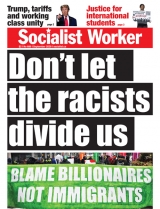
It starts like this: dawn on a Montreal bus, steel lunch pails rattling, headphones leaking news of a politician — this time Yves-François Blanchet, leader of the Parti Québécois — snarling about “crime” and “immigration” as if the two were welded together at birth. A few heads lift. A few eyes land on the man in the hi-vis jacket with a foreign accent, the woman in scrubs texting in Arabic, the student counting coins for the fare. The speech did its job before breakfast: plant suspicion, thin the air, make neighbours look like threats.
This is not a gaffe. It’s a plan. The far right doesn’t stumble into the lie that migrants cause crime; it manufactures that lie, seasons it with panic, and serves it whenever rent spikes, ERs overflow, or wages are shaved thin. It’s the oldest trick in the boss’s handbook: light the house on fire with austerity, then blame the smoke on the people who ran inside to save the furniture of this economy.
Here’s what’s true, and they know it: immigrants do not commit more crime than people born here. In many working-class neighbourhoods, crime falls when newcomers arrive — because communities tighten, people watch out for each other, and life gets organized around daycare pickup, shift changes, and mutual aid. But truth is an inconvenience when your project is to build a bigger cage.
Because that’s the project. The goal of tying migration to menace is to normalize the criminalization of migration. Once fear settles in, the unforgivable becomes “common sense”: administrative detention without charges; raids at workplaces that leave bosses untouched and workers terrified; permit traps that make people choose between abuse and deportation; data dragnets and ID checks that turn skin colour and accent into probable cause. The border becomes a laboratory where the state tests new tools of control — tools that never stay at the border. They boomerang back against strikers, students, tenants, anyone who dares to say no.
Divide and rule is not poetry; it’s payroll. Employers squeeze harder when a portion of the workforce is kept precarious by design. Closed permits, threat of removal, credential barriers — these aren’t bugs, they’re features. They suppress wages, fracture shop floors, and make union meetings feel risky. Meanwhile, the same politicians pointing at migrants hand gifts to speculators, privatizers, and monopolies. Your rent goes up. Your clinic waits longer. Your paycheque buys less. And you’re told to be angry at the man beside you on the bus.
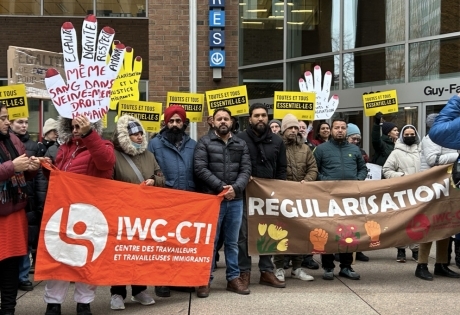
Real safety isn’t more cops at metro stations or more guards at detention centres. Real safety is papers in your pocket, a stable lease, a job that doesn’t wreck your back, a clinic that answers, a childcare spot that exists, and the unafraid right to organize. That means regularization for the undocumented. It means ending immigration detention, full stop. It means permits that free workers — not employers. It means firewalls between public services and enforcement. It means cities that refuse to collaborate with deportations. It means building enough social housing to pull the floor back under all of us and strangling speculation at the root.
And it means this, most of all: refusing the story that safety is a zero-sum game. The boss wants the nurse to blame the delivery driver, the tenant to blame the temp worker, the laid-off machinist to blame the student. We refuse. The only people who profit from that story are the ones cashing dividends while telling you to clutch your bag tighter.
So the next time Yves-François Blanchet — or any politician — tries to sell you fear, ask a simple question: who gets paid if we believe you? Not the worker walking home after the night shift. Not the parents juggling two jobs and two bus transfers. Not the kid translating at the pharmacy for her grandmother. The payout goes to the people who built their fortunes on our insecurity — economic, legal, and social — and who need a permanent suspect to keep the racket running.
We can break the script. We can name the lie, refuse the trap, and organize across the lines they draw for us. The bus is crowded. The city is tired. But the truth is stubborn: migrants are not the problem; they are our co-workers, our neighbours, our comrades in the same fight. The enemy isn’t on the seat next to you. The enemy owns the bus.
Section:
Topics:


Featured Event
Events
-
October 4, 2026TorontoOrganized by:International Socialists
Recent Videos


Visit our YouTube Channel for more videos:

Visit our UStream Channel for live videos: